"Bathroom mein grouting aur waterproofing dono karwa do" — if you have ever told a contractor this, you probably assumed grouting and waterproofing are similar things that work together to keep water out. They are not. They are two completely different processes that serve different purposes. Confusing them is one of the main reasons bathrooms and wet areas develop leaks even after spending money on "waterproofing."
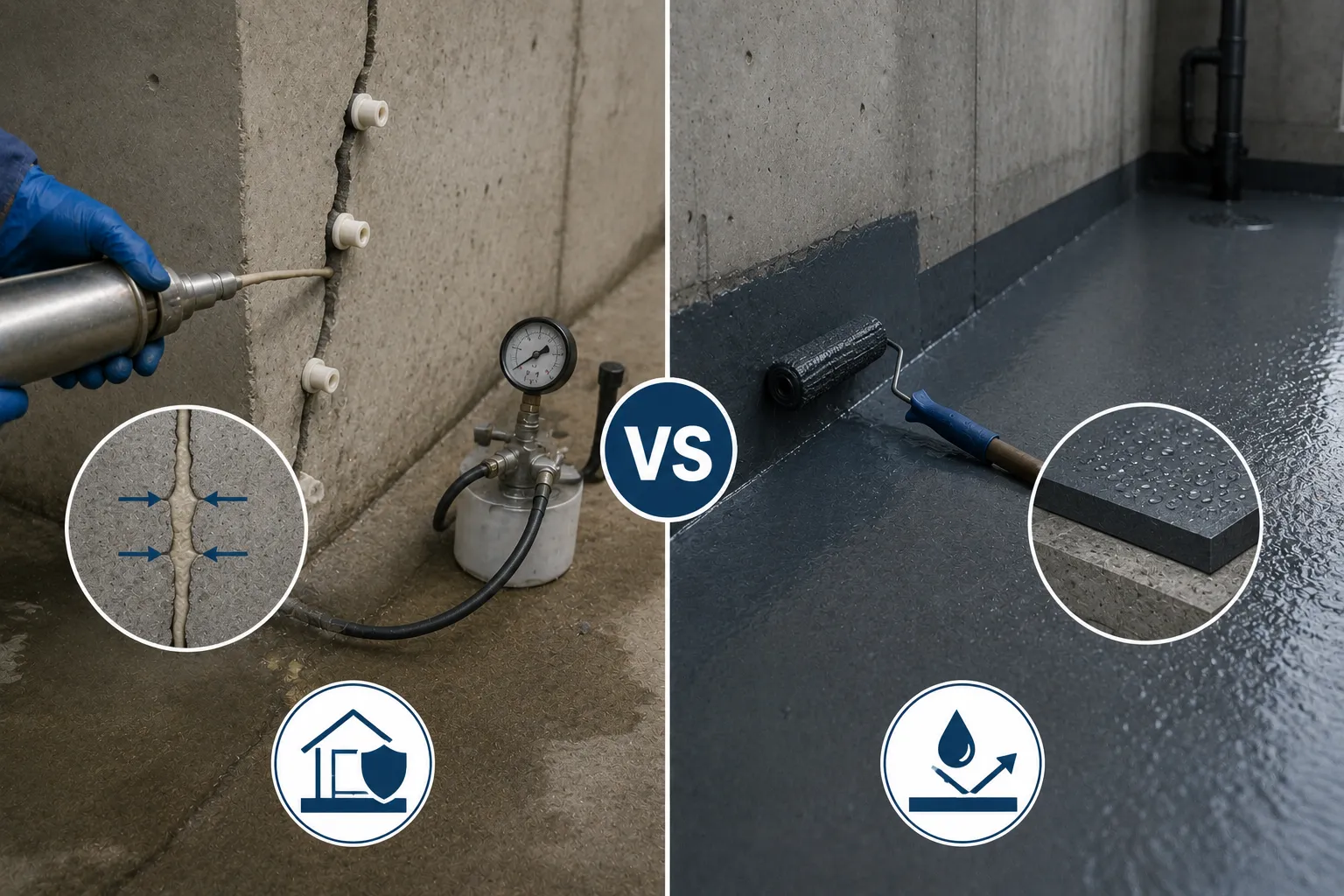
In simple terms, waterproofing is the layer that stops water from penetrating the structure. Grouting is what you do between tiles to fill the gaps. One works at the structural level, the other at the surface level. But because both involve preventing water from going where it should not, people lump them together. This article clears up the confusion so you know exactly what each does, when you need both, and when one is enough.
What Is Waterproofing?
Waterproofing is the process of making a building element impervious to water. It involves applying a membrane or coating to the structural slab, walls, or joints to create a barrier that water cannot pass through. Waterproofing is done at the structural level — below the tile layer, directly on the concrete slab or brick wall. If the waterproofing is done correctly, water that gets past the tiles will hit the waterproofing layer and be stopped. It will either evaporate or drain away through the slope, but it will not reach the structural slab or leak into the room below. Waterproofing materials include cementitious coatings, liquid polyurethane membranes, sheet membranes, and crystalline systems. Waterproofing is always applied before tiling. Once tiles are laid, you cannot redo the waterproofing without removing the tiles.
What Is Grouting?
Grouting is the process of filling the joints between tiles with a cementitious or epoxy material. The purpose of grout is to seal the gaps between tiles, prevent debris from collecting in the joints, and give the tiled surface a finished look. Grout is applied after the tiles have been fixed with tile adhesive. It sits between the tiles, not beneath them. Standard cementitious grout is porous and will absorb water. If you pour water on a tiled floor with cementitious grout, some of that water will seep through the grout joints and reach the tile adhesive layer below. This is by design — the waterproofing layer underneath is supposed to handle that water. Grout does not make the surface waterproof. It makes the tile joints water-resistant at best. High-performance epoxy grout is non-porous and provides better water resistance than cementitious grout, but even epoxy grout is not a substitute for proper waterproofing underneath.
Can Grouting Replace Waterproofing?
No. This is the most dangerous misconception in Indian construction. Some contractors and homeowners believe that if the tile grout is well done, no water will reach the slab, so waterproofing is optional. This is completely wrong. Grout joints shrink, crack, and degrade over time. Even epoxy grout can develop pinholes or debond from the tile edges. The moment the grout fails — and it will — water reaches the substrate. If there is no waterproofing layer underneath, that water enters the structural slab and causes leaks. Relying on grout alone for water protection in a bathroom is like relying on your paint job to protect your car's metal from rust. It might work for a while, but eventually, it will fail. Waterproofing is the only reliable way to prevent structural water damage in wet areas.
When Do You Need Both?
In bathrooms, kitchens, balconies, and any area exposed to water, you need both waterproofing AND grouting because they serve different purposes. The waterproofing protects the structure. The grout protects the tile layer and makes the surface cleanable. In Indian bathrooms where water is splashed everywhere during every use, having both layers of protection is essential. The waterproofing layer is the primary defence. The grout is the secondary defence that keeps water from sitting in the tile joints and causing mould.
When Is Grouting Enough Without Waterproofing?
For dry areas like living rooms, bedrooms, and hallways, waterproofing the entire floor slab is generally unnecessary. The tiles and grout seal the surface, and since there is no standing water, there is no risk of water penetrating to the slab. In these areas, grouting alone is sufficient. Even in these areas, waterproofing is sometimes recommended on ground floors to block rising moisture from the ground, but that is a different purpose.
Common Misconceptions in Indian Construction
One common belief is that waterproofing and grouting are the same thing applied differently. You know better now. Another is that using epoxy grout eliminates the need for waterproofing. Not true. Epoxy grout is more water-resistant than cement grout, but it is not a structural waterproofing solution. A third misconception is that waterproofing can be done after tiling by applying a coating over the tiles. Surface-applied coatings over tiles rarely last because the bond between the coating and the glazed tile surface is weak. The coating peels off within months. The only way to do proper waterproofing is before tiling. Grouting is then done as the final finishing step.
How They Work Together in a Bathroom
Think of a bathroom floor as having four layers. The structural slab is the base. On top of that goes the waterproofing layer — either a liquid membrane or cementitious coating applied to the slab and up the walls. The waterproofing needs to cure fully and pass a water test. Then a protective screed is laid over the waterproofing to protect it during tiling. On top of that, tiles are fixed using tile adhesive. Finally, the gaps between the tiles are filled with grout. In this system, the waterproofing handles the structural protection. The grout handles the surface finish and makes the floor easy to clean. Each layer has a specific job, and none of them can be skipped if you want a lasting result.
Cost Comparison
Waterproofing a standard Indian bathroom (40–50 sq ft) costs between Rs 5,000 and Rs 14,000 depending on the system. Grouting the same bathroom costs between Rs 500 and Rs 2,000 if done with standard cementitious grout, or Rs 2,000 to Rs 5,000 if done with epoxy grout. Grouting is far cheaper. Some homeowners see the price difference and think they can skip the expensive step and rely on the cheap one. That is a false economy. Fixing a leak caused by no waterproofing will cost you 10 to 20 times more than the waterproofing itself would have cost in the first place. The waterproofing is not an optional upgrade. It is a mandatory structural requirement for any wet area.
Conclusion
Grouting and waterproofing are not the same thing, and they are not interchangeable. Waterproofing is a structural barrier applied before tiling that stops water from penetrating the slab. Grouting is a surface finish applied after tiling that seals the gaps between tiles. In wet areas like bathrooms and balconies, you need both. In dry areas, grouting alone is sufficient. Cutting corners on waterproofing because the grout looks good is a mistake that will cost you dearly when the leak appears.
At Sterling Technotrade, we offer complete waterproofing solutions for bathrooms, terraces, and basements, as well as grouting additives. If you are planning a bathroom renovation and need guidance on the right waterproofing system, talk to our technical team.