Damp walls are one of the most common complaints in Indian homes. You see it as dark patches on the wall, peeling paint, plaster that crumbles when you touch it, and a musty smell that never quite goes away. It is not just ugly. Dampness damages the structure, ruins furniture placed against walls, and creates an unhealthy indoor environment. In severe cases, it leads to mould growth that can cause respiratory problems for the people living in the house.
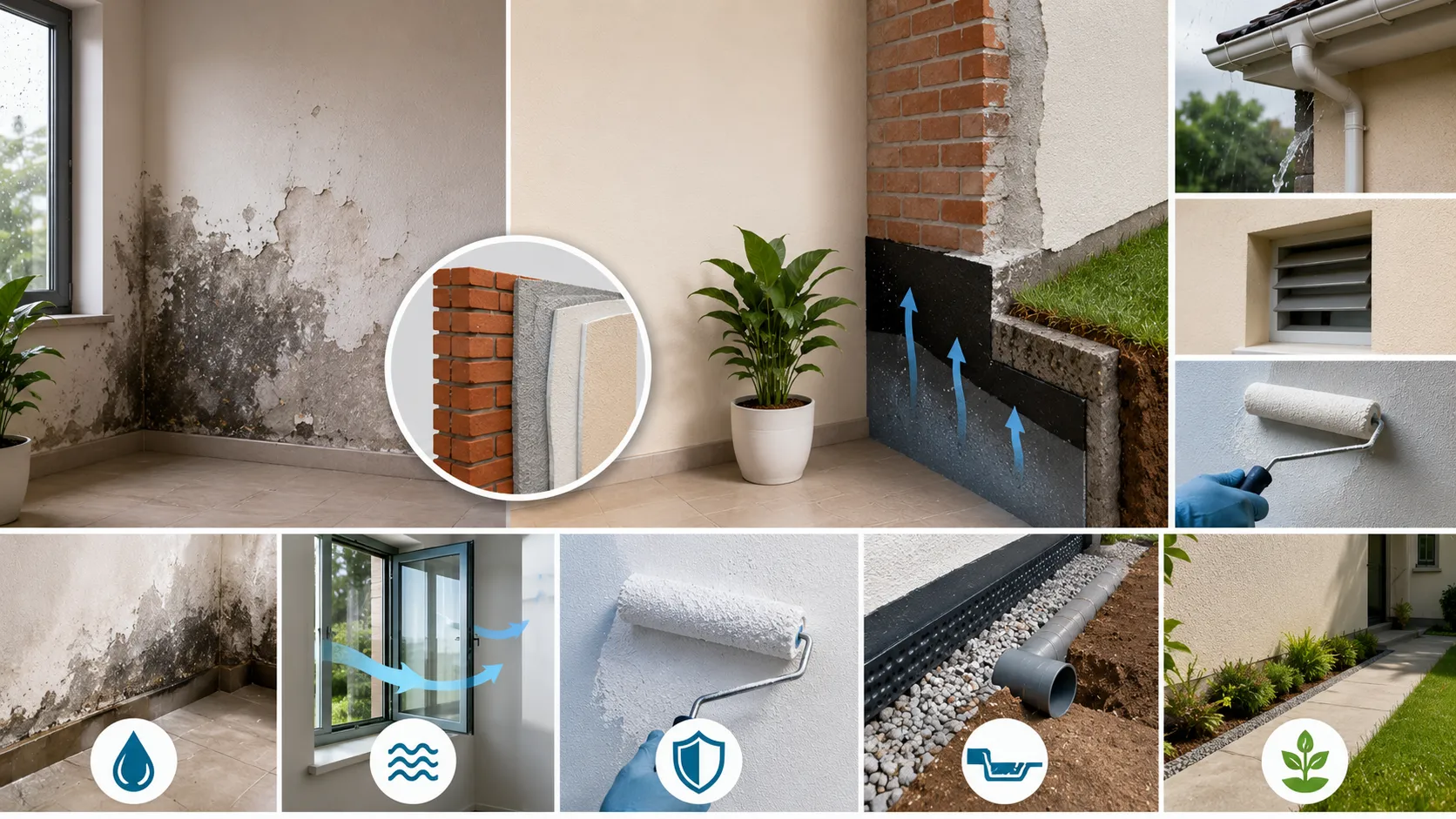
The frustrating part is that most homeowners treat the symptoms instead of the root cause. They repaint the wall every year, only to see the damp patches return. They apply a coat of waterproofing paint, and it peels off within months. The real solution is to understand where the moisture is coming from and fix it at the source. That is what this guide covers — the permanent solutions to wall dampness that actually work in Indian conditions.
The Three Types of Wall Dampness
Dampness in walls usually falls into one of three categories. Penetrating dampness is caused by rainwater entering through the external wall. This happens when the wall is porous, when there are cracks in the plaster, or when the wall is not protected by a waterproof coating. It shows up as damp patches on the interior surface after rain. Rising dampness occurs when groundwater is absorbed into the wall through capillary action. The moisture travels upward from the foundation, typically reaching 300 mm to 1 metre above the floor level. You will see the wall dampness starting from the bottom and rising. The third type is condensation dampness, caused by moisture in the indoor air condensing on cold wall surfaces. This is common in winter months and in rooms with poor ventilation like bathrooms and kitchens.
The treatment for each type is different. Using the wrong fix wastes money and time, so it is important to correctly identify your type of dampness before spending on a solution.
Solution 1: External Wall Waterproofing for Penetrating Dampness
If your interior walls show damp patches after rain and the dampness is not concentrated near the floor, you likely have penetrating dampness. The permanent fix is to waterproof the exterior surface of the wall. This stops the water before it enters the wall. For solid brick or concrete walls, apply a cementitious waterproofing coating on the exterior surface. This is a two-component system that bonds with the wall and forms a waterproof barrier. The cost ranges from Rs 45 to Rs 80 per sq ft. For walls where you do not want to change the appearance, use a transparent water-repellent coating. These silicone-based liquids penetrate the wall surface and make it hydrophobic — water beads up and runs off instead of being absorbed. The appearance of the wall stays the same. Transparent repellents cost Rs 35 to Rs 60 per sq ft.
Before applying any coating, the wall must be cleaned of dirt, efflorescence, and loose paint. Cracks in the plaster must be repaired with a flexible sealant. Pay special attention to the top of the wall (parapet or roof junction), as this is the most common entry point for water. If the dampness is concentrated around window frames, check that the window sill has a drip groove underneath and that the sealant around the frame is intact.
Solution 2: Damp Proof Course for Rising Dampness
Rising dampness is more challenging to fix because the moisture is coming from the ground. The traditional solution is a damp-proof course (DPC) — a layer of waterproof material inserted into the wall above ground level to block the upward capillary movement of water. In new construction, a DPC is built in during construction. For existing buildings, a chemical DPC can be injected into the wall. Holes are drilled into the mortar joints at regular intervals near the base of the wall, and a silicone-based or water-repellent chemical is injected under pressure. This chemical creates a waterproof barrier within the wall that stops rising moisture. The process is effective for walls up to 500 mm thick. For walls thicker than that, holes are drilled from both sides. After the chemical DPC treatment, the affected plaster is removed up to 1 metre height and replaced with waterproof plaster. The cost of chemical DPC injection ranges from Rs 60 to Rs 120 per linear foot depending on wall thickness and the chemical used.
In some cases, rising dampness is caused by a missing or damaged DPC at the construction stage. If the water table in your area is high, or if the ground floor slab is in direct contact with soil without a proper membrane, addressing the root cause may require excavation around the foundation to install a physical DPC. This is expensive but is the only permanent fix for severe rising dampness.
Solution 3: Internal Tanking for Below-Grade Walls
For basement walls or walls that are below ground level, the approach is different because the wall is in constant contact with soil moisture. The most reliable solution is internal tanking — applying a waterproofing system to the interior surface of the wall. Cementitious crystalline waterproofing is the preferred method for below-grade walls. The crystalline chemicals react with water and concrete to form needle-like crystals that grow into the pores and cracks of the concrete, making it permanently watertight. Unlike coatings that sit on the surface and can peel, crystalline waterproofing becomes part of the wall itself. It can withstand high hydrostatic pressure and is self-sealing — if a minor crack develops, the crystals grow again when they contact water. Crystalline systems cost Rs 80 to Rs 150 per sq ft for material and labour.
Solution 4: Addressing Condensation Dampness
Condensation dampness is easier to fix because the source is inside the house. The solution involves reducing indoor humidity and improving ventilation. Install exhaust fans in bathrooms and kitchens and run them during and after use. Use a dehumidifier in rooms that stay consistently damp. Insulate cold walls — in some homes, certain walls get colder than others because of their orientation or construction material. Applying thermal insulation or using an anti-condensation paint can raise the surface temperature and prevent condensation. Open windows regularly to allow air circulation. If the condensation is severe, consider a mechanical ventilation system that continuously exchanges indoor air with fresh outdoor air. Unlike penetrating or rising dampness, condensation does not usually require chemical waterproofing treatment. Focus on ventilation and temperature control.
Preventive Measures During Construction
If you are building a new home, preventing dampness is much cheaper than fixing it later. Use a damp-proof course at the plinth level, overlapping with the floor slab waterproofing. Apply a waterproof coating or water-repellent treatment to all exterior walls. Ensure that the plinth protection around the building is at least 600 mm wide and slopes away from the wall to drain water. Use waterproofing admixtures in the plaster and mortar for external walls. Ensure windows have proper sills with drip grooves and that all wall penetrations (pipes, conduits) are properly sealed. And do not skip the terrace waterproofing — a leaking roof often manifests as damp patches on the top-floor walls.
Conclusion
Damp walls are not something you have to live with forever. The solution starts with correctly identifying the type of dampness. Penetrating dampness needs external wall waterproofing. Rising dampness needs a damp-proof course — either chemical injection or physical barrier. Below-grade dampness needs internal crystalline tanking. Condensation dampness needs ventilation and insulation. Once you fix the root cause, repainting the wall will actually last. If you are unsure about the type of dampness in your home, a professional assessment is money well spent.
At Sterling Technotrade, we manufacture a full range of waterproofing products for walls, including cementitious coatings, crystalline systems, and transparent water repellents under the Technoproof brand. If you need help diagnosing or fixing damp walls, contact our technical team.