Epoxy flooring has become quite the buzzword in Indian home renovation circles over the last few years. Walk into any modern home exhibition or scroll through interior design pages on Instagram, and you will see glossy, seamless epoxy floors that look like a sheet of glass. But here is the real question every Indian homeowner needs to ask — is epoxy flooring actually practical for a home in India, or is it just a trend that looks good in pictures but fails in real life?
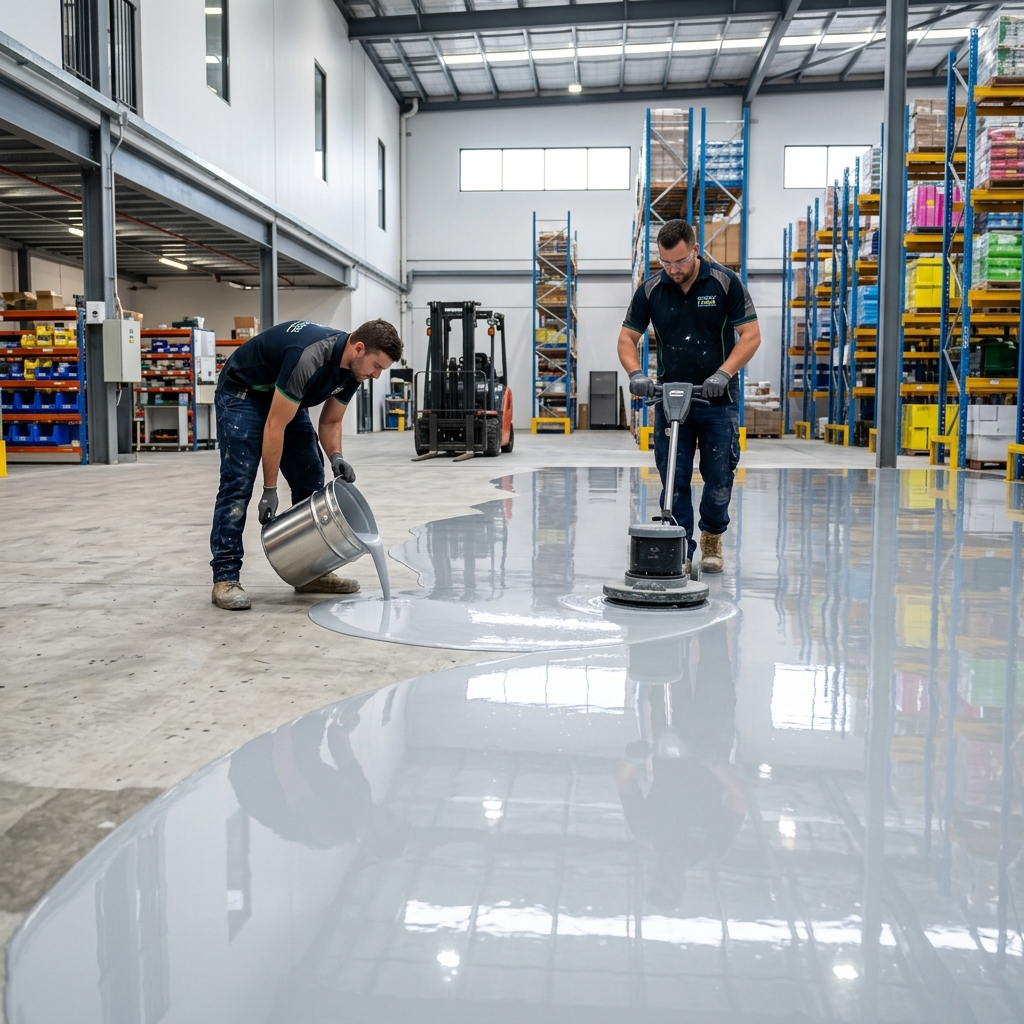
The honest answer is: it depends. Epoxy flooring is excellent for certain areas of a home and a poor choice for others. It is not a one-size-fits-all replacement for tiles or marble. But in the right application, it outperforms almost any other flooring option in terms of durability, ease of cleaning, and visual impact. Let us break down where it works, where it does not, and what it will cost you.
What Exactly Is Epoxy Flooring?
Epoxy flooring is a surface coating system made by mixing epoxy resin with a hardener. The two components chemically react to form a rigid, durable plastic material that bonds strongly to concrete floors. The result is a seamless, non-porous surface that is highly resistant to abrasion, chemicals, stains, and impacts. Unlike tiles, there are no grout lines where dirt accumulates. Unlike marble or granite, the surface does not etch or stain easily.
Where Epoxy Flooring Makes Sense in an Indian Home
The best place for epoxy flooring in a home is the garage or parking area. Garage floors take a beating — oil spills, tyre marks, heavy tool drops, and constant vehicle movement. Epoxy handles all of this effortlessly. A single drip of oil on a tile floor stains permanently, but on an epoxy floor, you just wipe it off. For parking areas in independent houses, epoxy flooring is arguably the best choice available today.
The second excellent application is the kitchen. Kitchen floors see water spills, oil splatters, dropped utensils, and heavy foot traffic. Epoxy is waterproof, easy to clean with just a mop, and seamless so there are no grout lines for dirt to collect. Many Indian homeowners are now choosing epoxy for their kitchen floors, especially in open-plan layouts where the kitchen flows into the living area.
Balconies and utility areas are another great fit. These areas are exposed to moisture and weather, and tiles in balconies often develop mould in the grout lines. Epoxy eliminates this problem entirely. A liquid-applied polyurethane or epoxy coating on a balcony floor creates a waterproof, slip-resistant surface that needs minimal maintenance.
Where Epoxy Flooring Falls Short
Living rooms and bedrooms are where the debate gets interesting. Epoxy floors are hard and cold underfoot — they do not have the warmth of wood or the softness of carpet. In Indian homes where people often sit on the floor, a hard epoxy surface can feel uncomfortable. Vitrified tiles or engineered wood are more practical choices for these areas.
Epoxy is also susceptible to UV yellowing. If you install a light-coloured epoxy floor in a room with direct sunlight exposure, the floor will develop a yellowish tint over time. This is a chemical property of standard epoxy resins. Polyurethane topcoats with UV stabilisers can reduce this effect, but they add to the cost. For rooms with large windows and direct sun, tiles or vinyl flooring are better options.
Another consideration is repair. If an epoxy floor gets badly scratched or chipped, repairing just the damaged spot is difficult because the new epoxy may not blend perfectly with the old. You might end up having to redo the entire floor. Tiles, by contrast, can be individually replaced. For high-traffic living areas, this is something to keep in mind.
Types of Epoxy Flooring for Homes
Self-levelling epoxy gives a smooth, high-gloss finish like a mirror. It is the most popular choice for modern homes. The epoxy is poured onto the floor and spreads itself level, creating a perfectly flat surface. Metallic epoxy includes pigments that create a swirling, three-dimensional effect. It looks stunning but is expensive and requires skilled application. Epoxy flake systems have coloured vinyl chips broadcast into the wet epoxy, creating a textured, slip-resistant surface. This is a good choice for garages and utility areas. Epoxy mortar systems are the heaviest-duty option, mixed with silica sand for extreme durability. Generally overkill for homes unless you have a workshop area.
How Much Does Epoxy Flooring Cost in India?
The cost of epoxy flooring for homes varies significantly based on the system and the quality of the product. Standard self-levelling epoxy costs between Rs 80 and Rs 140 per square foot, including material and labour. Metallic epoxy is more expensive at Rs 150 to Rs 250 per square foot because of the specialised pigments and skill required. Epoxy flake systems range from Rs 100 to Rs 180 per square foot. For a typical 200 sq ft kitchen, expect to pay between Rs 16,000 and Rs 28,000 for a standard epoxy floor. For a 300 sq ft garage, budget Rs 24,000 to Rs 42,000. These prices include surface preparation, primer, epoxy application, and a topcoat.
At Sterling Technotrade, our Technofloor range includes self-levelling epoxy, epoxy flake, and polyurethane flooring systems suitable for residential applications. We also provide professional installation services through our network of trained applicators.
The Installation Process
Epoxy flooring installation is not a DIY job for most people. It requires careful surface preparation, including grinding the concrete to create a mechanical bond, repairing any cracks, and ensuring the surface is perfectly clean and dry. The epoxy is then mixed and applied in layers — a primer coat, the main epoxy body coat, and a topcoat. Each layer needs to cure before the next one is applied. The total process for a residential floor typically takes 3 to 5 days, during which the area cannot be used. Temperature and humidity during application matter — epoxy cures differently in cold and hot conditions. In Indian summers, you need to work fast because the pot life of mixed epoxy can be as short as 20 minutes.
Maintenance and Longevity
One of epoxy's biggest advantages is how easy it is to maintain. Daily sweeping and occasional wet mopping with a mild detergent is all it needs. No waxing, no polishing, no special cleaners. Avoid using abrasive scrubbers that can dull the gloss. With proper installation and normal residential use, an epoxy floor lasts 8 to 12 years before needing a recoat. In garages, it can last 10 to 15 years. The topcoat may show wear in high-traffic areas after 5 to 7 years, but a fresh topcoat can restore the appearance without replacing the entire system.
Conclusion
So, is epoxy flooring worth it for your home? For kitchens, garages, balconies, and utility areas, absolutely yes. The seamless, waterproof, easy-to-clean surface is a genuine improvement over tiles in these spaces. For living rooms and bedrooms, it is a matter of personal preference. If you love the modern industrial look and do not mind a hard floor surface, it can work beautifully. But if you want warmth and softness underfoot, stick with tiles, wood, or vinyl in those areas. The key is to use the right product in the right place and work with an experienced applicator. A poorly installed epoxy floor will peel and delaminate, and fixing it is costly. But a well-installed epoxy floor in the right location is one of the best home improvement investments you can make.
If you are considering epoxy flooring for your home and want expert guidance, reach out to our team at Sterling Technotrade. We will help you choose the right system and connect you with a trusted installer in your city.