There is no worse feeling during the monsoon than hearing that slow, steady drip from your ceiling. A leaking roof is stressful, especially when the rain is pouring hard and you cannot get a contractor to come for days. But here is the thing — not all roof leaks need a full re-waterproofing job. Some can be fixed in minutes with the right temporary measure, and many permanent fixes are simpler than you think.
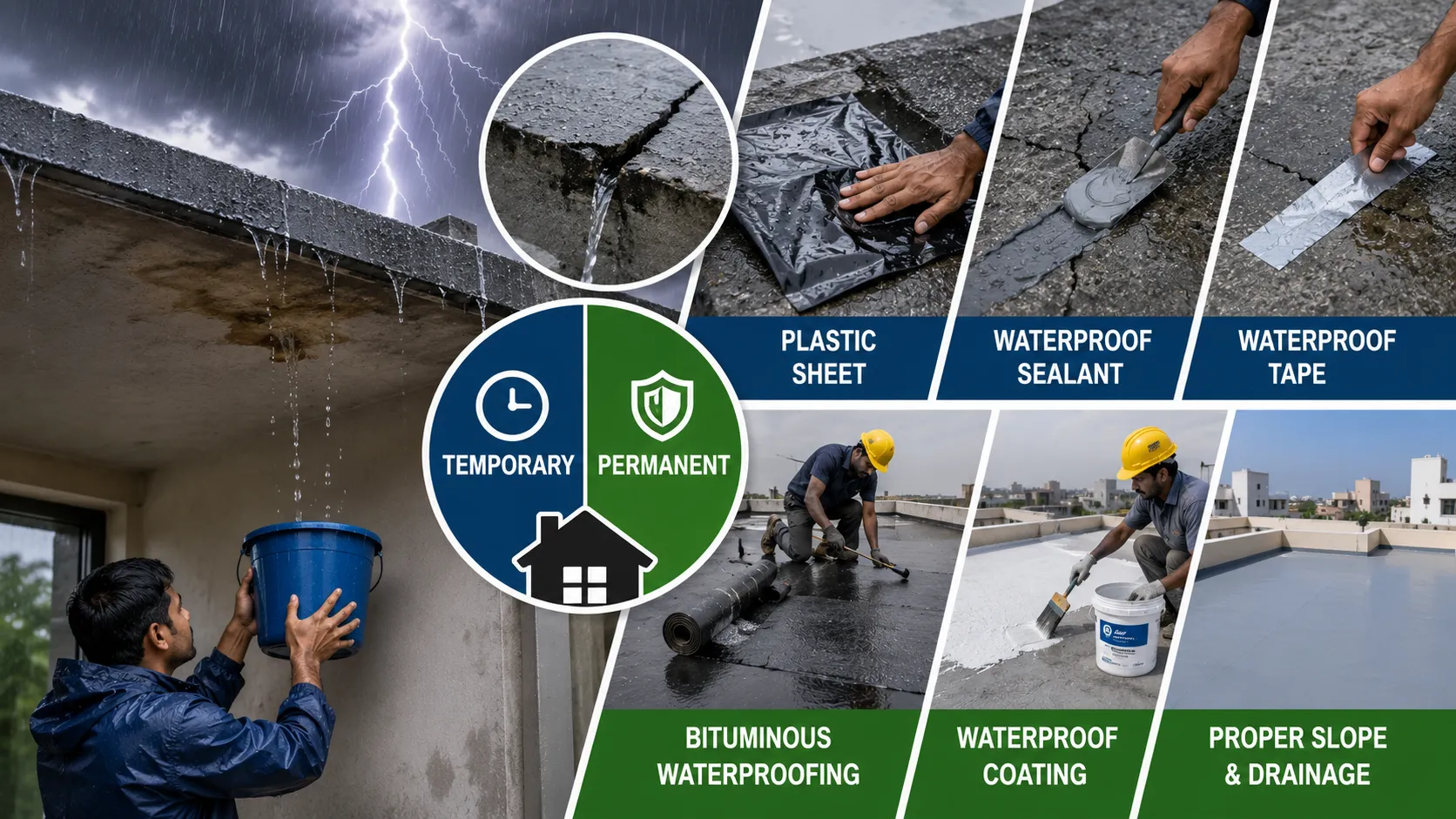
This guide covers both. First, what you can do right now to stop the leak temporarily. And second, how to fix it permanently once the weather clears. The Indian monsoon brings unique challenges — heavy rainfall, high humidity, and often poor access to rooftops during the season. Knowing the right approach for each situation saves you from unnecessary damage to your ceiling, electrical fittings, and walls.
First, Find Where the Water Is Actually Coming From
This is trickier than it sounds. Water rarely leaks straight down from the point of entry. It travels along the roof slab, follows cracks, runs along reinforcement bars, and drips at a spot that may be metres away from the actual breach. So do not assume the leak point on your ceiling is directly below the problem on the roof.
Go up to the terrace during or just after rain and look for standing water, cracks in the waterproofing, failed expansion joints, or damaged areas around drain pipes and parapet walls. Mark any suspicious areas with chalk. If the roof is wet, look for areas that are drying faster — they indicate points where water is being absorbed into the slab. If you cannot go up safely during rain, wait for a dry spell and inspect the same areas for visible damage like blistering, peeling, or cracked waterproofing layers.
Temporary Fixes to Stop the Leak During Rain
If water is actively dripping through your ceiling, you need a stopgap measure first. The fastest temporary solution is to apply a waterproofing repair compound or hydraulic cement directly into the crack or hole from the roof side, if you can access it safely. These products set in minutes even in wet conditions. Sterling Technotrade's Technoproof range includes rapid-setting repair compounds that can be applied on damp surfaces. Push the compound firmly into the crack, smooth it out, and it will stop the leak within minutes.
If you cannot access the exact location, or if the rain is too heavy, a temporary patch using a waterproof tarpaulin or plastic sheet is your best bet. Lay the sheet over the affected area with at least two feet of overhang on all sides. Weight it down with bricks or sandbags. This will divert the water away from the damaged area until you can do a proper repair. For small cracks, you can also use a quick-fix epoxy putty. Roll it into a thin rope, press it into the crack from the roof side, and it hardens in 15–20 minutes even in damp conditions.
Permanent Fix 1: Crack Injection for Concrete Roofs
Most RCC roof leaks happen through cracks in the concrete. These cracks may be structural (due to settlement or load) or non-structural (due to thermal movement or shrinkage). For individual cracks, injection is the most effective permanent repair. You inject low-viscosity polyurethane resin or epoxy into the crack under pressure. The resin penetrates deep into the crack, bonds to the concrete, and seals it permanently. Polyurethane injection resin is preferred for active leaks because it expands on contact with water and fills the crack completely.
The process involves drilling small holes along the crack at intervals, inserting injection packers, and pumping the resin through them. The resin flows through the crack network and seals it from the inside. This method is clean, fast, and does not require removing the existing waterproofing. It works best for cracks up to 2 mm wide. For wider cracks, the area needs to be routed out and filled with a repair mortar before injection.
Permanent Fix 2: Full Terrace Re-Waterproofing
If your terrace has multiple leaks, blistered waterproofing, or the existing treatment is more than 5–7 years old, spot repairs will not be enough. You need to strip the old waterproofing and apply a new system. This is more expensive but gives you a fresh start with a full warranty.
The process starts with removing all old waterproofing layers, tiles, and screed down to the structural slab. The slab is inspected for cracks, which are repaired first. A primer is applied, followed by a new waterproofing system — either a liquid polyurethane membrane or a cementitious system, depending on your budget and requirements. For terraces in Indian cities with extreme sun and rain, liquid polyurethane is recommended because it remains flexible and can bridge minor cracks that develop over time. A protective screed or tile layer is applied over the membrane to protect it from foot traffic and UV exposure.
Full terrace re-waterproofing for an average 500 sq ft terrace takes 5–7 days and costs between Rs 50,000 and Rs 75,000 for a quality liquid membrane system. While the upfront cost seems high, consider that it protects the structure underneath and lasts 10–12 years.
Permanent Fix 3: Repairing Parapet Walls and Expansion Joints
Many roof leaks do not come through the slab itself but through the junction between the parapet wall and the roof slab, or through failed expansion joints. Parapet walls are exposed to rain on both sides and are often neglected during waterproofing. If the coping on top of the parapet is damaged or the joint between the parapet and slab has cracked, water enters through the parapet and travels down into the slab below.
The fix involves cutting out the damaged sealant or mortar at the parapet-slab junction, cleaning the gap, and refilling it with a flexible polyurethane sealant. The top of the parapet wall should also be covered with a waterproofing coating or metal cap to prevent water ingress from above. Expansion joints on the terrace — typically found in larger buildings — need to be cleaned out and refilled with a joint filler and a flexible sealant. This is specialised work and is best handled by a professional waterproofing contractor.
When to Call a Professional vs DIY
Some roof repairs are perfectly fine to do yourself. Applying a rapid repair compound to a small crack or patching a failed sealant joint around a drain pipe can be done with basic tools and a trip to the hardware store. But for anything involving structural cracks, full re-waterproofing, or access to multiple leak points, call a professional waterproofing contractor. The risk of making the problem worse or missing a hidden issue is high when you do not have the experience.
A professional will do a proper diagnosis, use the right materials, and provide a warranty on the work. Sterling Technotrade offers both products and professional waterproofing services through our network of trained applicators across India.
Preventive Measures Before Next Monsoon
The best leak fix is the one you never need. Inspect your terrace before the monsoon season starts — ideally in February or March. Look for cracks, blisters, ponding water, and damaged sealant around pipes and drains. Clear all drains and downpipes of debris. Apply a coat of reflective or elastomeric waterproofing coating if the existing layer is more than 3 years old. Trim any overhanging tree branches that could damage the waterproofing during storms. A small preventive investment before the rains saves you from emergency repairs during them.
Conclusion
A leaking roof during monsoon is frustrating, but it is fixable. For immediate relief, use a rapid-set repair compound or a tarpaulin patch. For permanent solutions, choose between crack injection for isolated cracks, full re-waterproofing for aged terraces, or targeted sealant repairs at parapets and expansion joints. The key is to act quickly — water damage only gets worse with time. If you are unsure about the best approach, consult a professional. And once the repair is done, set a reminder to inspect your roof every year before the monsoon arrives.
At Sterling Technotrade, we manufacture a complete range of roof waterproofing and repair products. Contact our team for product recommendations or to connect with an authorised applicator in your area.